
Metric One
16,900
Flights cancelled during Southwest's 2022 holiday disruption.
For teams who know that a message unanswered is a customer lost.
Learn MoreAirlines, OTAs, Hotels, Mobility Platforms, And Travel Operators Already Have Customer Channels.
The Gap Appears When Travel Plans Change And The System Cannot Understand The Customer’s Situation, Retrieve Booking Context, Offer The Next Best Option, Escalate Urgent Cases, And Prove What Happened.
That Is The Travel
Communication Problem.
Metric One
Flights cancelled during Southwest's 2022 holiday disruption.
Metric Two
Passengers stranded during the operational meltdown.
Metric Three
Refunds and reimbursements DOT ensured for affected passengers.
Travel is one of the few industries where the customer’s plan can change completely after purchase.
In Those Moments, The Customer Does Not Want A Generic Notification.
They Need To Know What Changed, What Their Options Are, What They Are Owed, Where They Should Go Next, And Whether Someone Is Actually Handling The Issue.
Travel Communication Breaks When The System Can Send A Message But Cannot Resolve The Situation Behind It.
That Is Why Travel Operators Need More Than Outbound Alerts.
They Need Communication Infrastructure That Can Connect Customer Intent, Booking Data, Disruption Context, Policy Rules, Partner Systems, And Human Escalation Into One Recovery Path.
Disruption Becomes A Customer Crisis When Communication Collapses.
The U.S. DOT Said Southwest Cancelled 16,900 Flights During Its 2022 Holiday Meltdown, Stranding More Than Two Million Passengers.
When Support Queues Collapse, Passengers Lose Recovery Time.
DOT Found Southwest Customers Faced Busy Signals, Hours-Long Queues, And Dropped Calls While Trying To Get Help During The Disruption.
A Delayed Update Can Be Worse Than No Update.
DOT Found Many Southwest Customers Did Not Receive Flight-Status Notifications, While Others Received Inaccurate Ones.
When a flight, hotel, or booking changes, customers need clear next steps: rebook, refund, wait, reroute, or escalate.
Disruption creates thousands of simultaneous customer questions. Human queues alone cannot absorb the first wave
Refunds, vouchers, meals, hotels, and alternate travel options depend on policy, route, fare, jurisdiction, and disruption cause
PNR, passenger status, fare class, payment, ancillaries, loyalty tier, and partner inventory often sit in separate systems
A message saying “cancelled” is not enough. Customers need choices, confirmation, and a way to complete the next action.
When a passenger finally reaches support, the agent often lacks the full timeline of messages, attempted actions, and customer selections.
Most Travel Communication Is Designed To Notify.
A Travel-Grade System Must Also Help Recover.
It Should Continue Automatically When The Customer’s Intent Is Clear, The Policy Path Is Approved, And The Next Best Action Is Available
It Should Pause When Inventory Is Uncertain, Refund Rules Are Complex, Eligibility Is Unclear, Or The Customer’s Case Needs Human Judgment
It Should Escalate When The Passenger Is Stranded, High-Priority, Vulnerable, Already At The Airport, Or Facing A Policy Exception
 :
:Identify Cancellation, Delay, Booking Change, Missed Connection, Refund, Or Baggage Intent.
Match Passenger, PNR, Route, Channel, Loyalty Tier, And Urgency
Pull Booking Data, Disruption Status, Fare Rules, Policy, Inventory, And Past Communication
Present The Approved Next-Best Action: Rebook, Refund, Voucher, Hotel, Call-Back, Or Escalation
Record Passenger Choice And Send The Confirmation On The Right Channel
Route Complex, High-Risk, Or Exception Cases To Agents With A Complete Brief.
Route Complex, High-Risk, Or Exception Cases To Agents With A Complete Brief.
Record Passenger Choice And Send The Confirmation On The Right Channel
Present The Approved Next-Best Action: Rebook, Refund, Voucher, Hotel, Call-Back, Or Escalation
Preserve Message History, Status Updates, Passenger Selections, And Resolution Actions.
gives travel teams customer recovery infrastructure.It is the conversation infrastructure layer between customer channels and travel systems.
It helps travel operators detect passenger intent, retrieve booking context, apply policy rules, trigger approved workflows, and escalate exceptions with full briefing when a human needs to step in.
Across WhatsApp, SMS, RCS, Instagram, and Telegram, the customer conversation stays connected to the travel outcome.
Classify cancellation, delay, refund, rebooking, baggage, check-in, visa, hotel, and itinerary requests before routing or responding.
Connect conversations to PNR, itinerary, passenger profile, fare class, loyalty status, payment, and prior support history.
Respond based on refund rules, fare conditions, disruption type, eligibility, and business-approved next steps.
Escalate with what changed, what the passenger asked, what Dootiq checked, what was offered, and what should happen next.
Keep context intact across WhatsApp, SMS, RCS, Instagram, Telegram, and future support touchpoints.
Preserve the timeline of notifications, customer selections, agent handoffs, and resolution actions.
Order questions become order actions.
Resolution Path
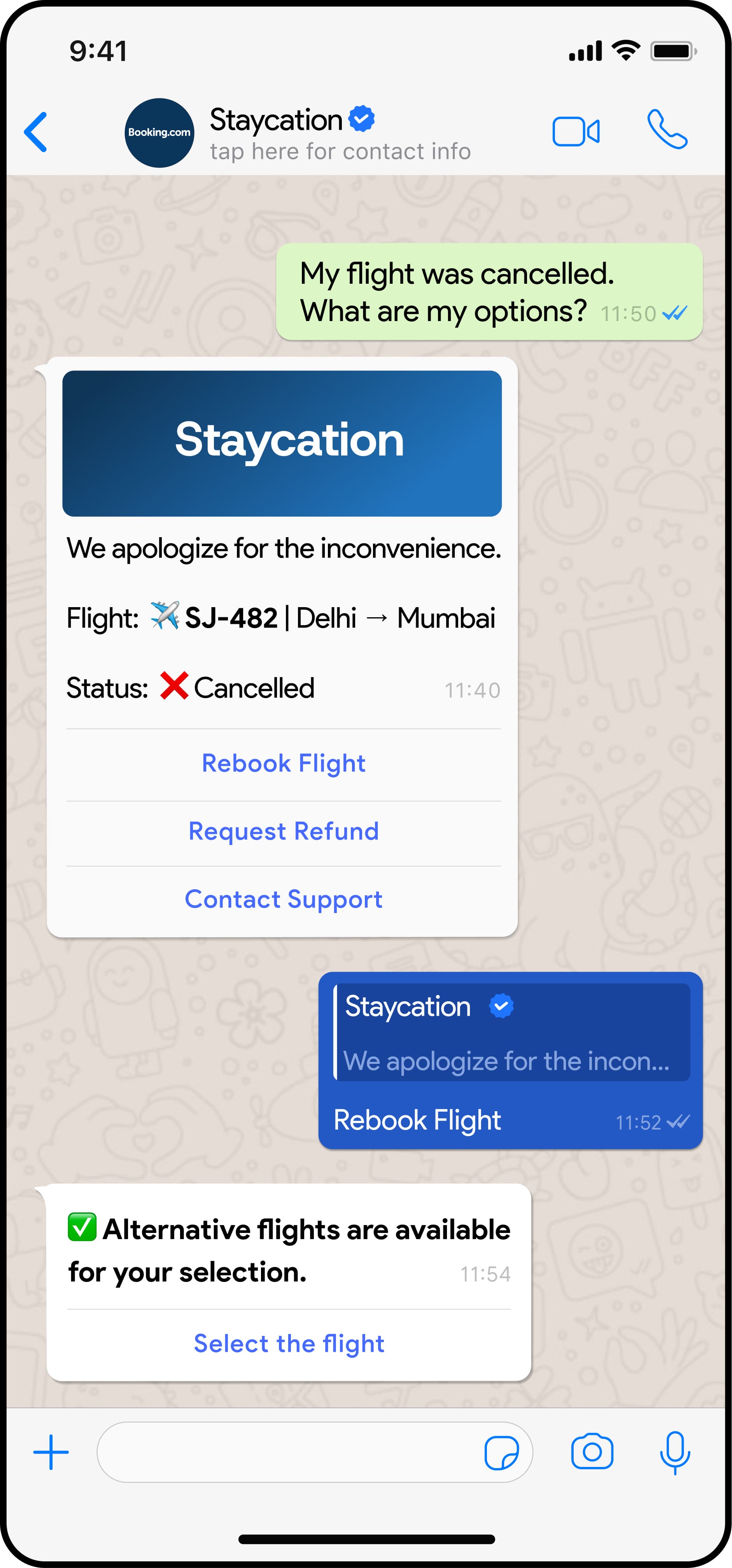
Dootiq detects cancellation intent, retrieves the booking, checks alternate flights and refund rules, offers available recovery paths, and escalates if no approved option exists.
Outcome
The passenger gets a clear next step instead of joining a queue with no context.
The communication layer must be ready for review.
That means every customer interaction needs context.
DootIQ Is Designed For This Reality.
Passenger notifications, status changes, and recovery messages remain traceable.
High-urgency, stranded, vulnerable, or exception cases move to human review with complete context.
Refund, rebooking, voucher, and accommodation guidance can follow approved business rules.
Messages, options, passenger choices, handoffs, and actions remain preserved for review.
Editorial Article
No travel operator can prevent every disruption.
But customers do not judge the experience only by whether disruption happened. They judge it by what happened next.
Dootiq helps travel teams turn customer conversations into governed, auditable, cross-channel recovery paths.